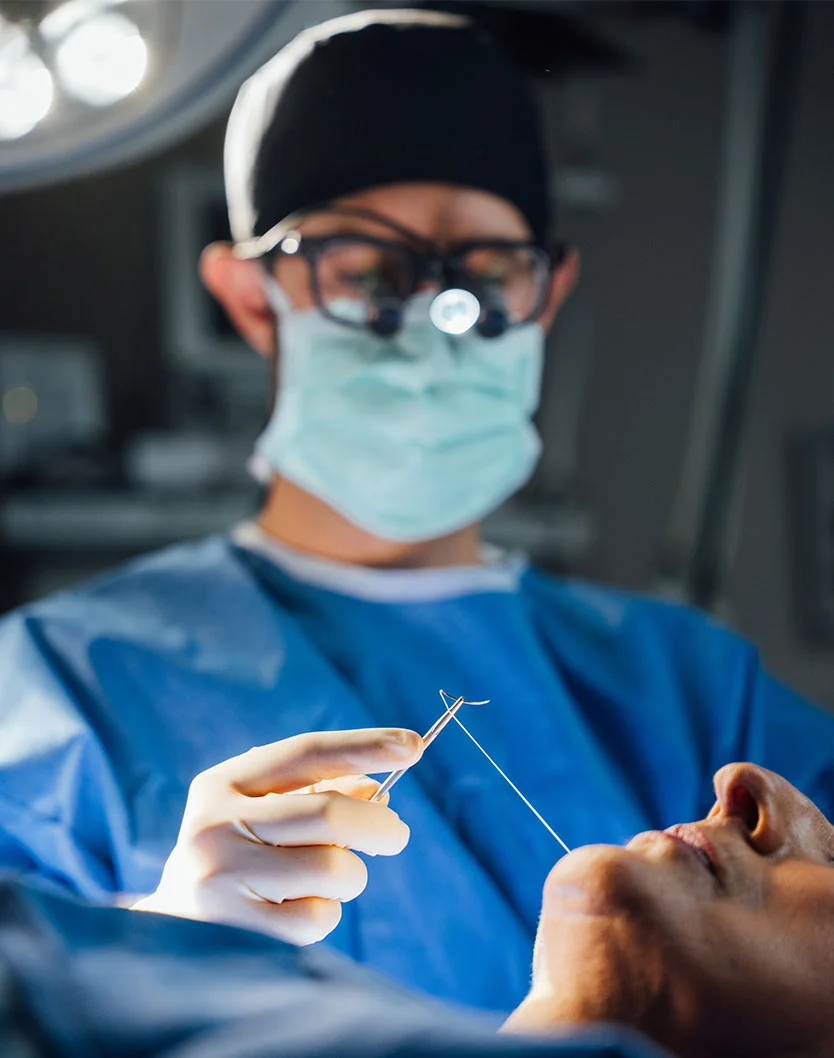
Mohs surgery is a highly precise, outpatient procedure performed under local anesthesia by a dermatologist who specializes in this technique. It offers the highest cure rate available (up to 99% for previously untreated skin cancers), making it a gold standard in many cases.
The procedure is completed in stages during a single visit. The Mohs surgeon removes a thin layer of tissue from the affected area and examines it under a microscope while you wait. If cancer cells are still present at the margins, the process is repeated layer by layer until the tissue is completely clear. This meticulous method ensures complete cancer removal while preserving as much healthy tissue as possible, resulting in the smallest defect necessary.
Because of its tissue-sparing benefits, Mohs surgery is especially favored for cosmetically and functionally sensitive areas like the nose, lips, ears, and eyelids, where preserving normal appearance and function is critical.
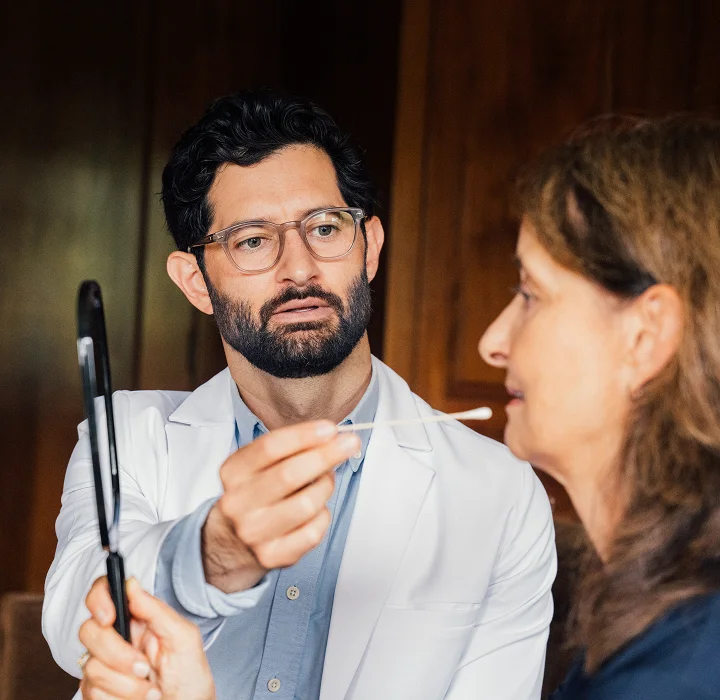
In some cases, the wound may be small enough to heal on its own, but when a more noticeable defect remains, Dr. Block-Wheeler will perform reconstructive surgery, typically within a few days of your Mohs procedure. Our team works closely with your Mohs dermatologist to coordinate care, minimizing the time between cancer removal and reconstruction. For more extensive or deeper defects, multiple reconstructive procedures may be required to achieve optimal functional and aesthetic results.
Curettage and electrodesiccation is a common skin cancer removal technique typically used for small, superficial basal cell or squamous cell carcinomas that are not located in cosmetically sensitive areas. In this procedure, your dermatologist will use a sharp instrument called a curette to scrape away the cancerous tissue gently. Afterward, the area is treated with an electric needle (electrodesiccation) to destroy any remaining cancer cells and to stop bleeding. This process may be repeated several times during the same session to ensure thorough treatment.
Although this method is quick and effective for certain types of skin cancer, it can leave a round, shallow wound that may heal with some textural or color changes. If the defect is in a visible area or does not heal optimally, Dr. Block-Wheeler may be consulted to perform a secondary procedure to improve the appearance of the site or to assist in initial closure if needed, particularly if function or aesthetic contour is a concern.
Excisional surgery involves surgically removing the skin cancer along with a margin of surrounding healthy tissue to ensure all malignant cells are eliminated. This method is often used for larger or more deeply rooted tumors and is sometimes recommended when Mohs surgery is not an option or necessary.
After the dermatologist or surgical oncologist completes the excision, the resulting defect may vary in size and depth depending on the tumor’s location and extent. Dr. Block-Wheeler is often consulted for reconstruction, particularly when the removal is located in a highly visible or delicate area such as the face. He will use advanced surgical techniques, including skin flaps or grafts when necessary, to close the wound in a way that maintains both natural appearance and proper function. His goal is to help patients heal in a way that feels seamless, with minimal visible scarring.